Projects
Research, Conservation, and Monitoring Projects

Camera-trap image of a GPS-collared lynx monitored as part of the project in south-western Anatolia (photo: Muhammet I. Sentürk)



Research on Balkan lynx maternial lineage in Anatolia
Principal Investigator · South-western Türkiye · 2023-2025
This project investigates the recently documented Balkan lynx maternal lineage in south-western Anatolia, with the aim of characterizing the ecological, spatial, and genetic distinctiveness of this isolated population.
Funded by the EuroNatur Stiftung, the project integrates multiple complementary research components, including:
diet and foraging ecology,
spatial behaviour and habitat use,
population status and distribution, and
phylogenomics and maternal lineage structure.
By combining field-based monitoring, genetic sampling, and spatial analyses, the project generates critical evidence for understanding both the evolutionary significance and the conservation status of this unique lynx population.
To date, two lynx individuals have been monitored using GPS telemetry, dietary and genetic samples have been collected across multiple regions, and camera trapping has been employed to assess population status and distribution within the study area. The project has produced three final technical reports addressing:
foraging and trophic ecology,
spatial behaviour, distribution, and population status, and
phylogenomics of the Balkan lynx population in south-western Anatolia.
Overall, the results directly inform species conservation planning, support regional management strategies, and contribute to international discussions on Balkan lynx conservation.

Camera trap images of striped hyena, caracal, common genet and Afro-asiatic wildcat in IFBTRR.


Wildlife and Conservation-Priority Site Assessment in IFBTRR
Senior Fauna Expert · Saudi Arabia · 2025
This project aimed to assess fauna diversity and composition, and conservation priority sites and reserves across the Imam Faisal bin Turki Royal Reserve (IFBTRR), one of Saudi Arabia’s largest and most heterogeneous protected areas. The work updated existing baselines and directly informed reserve-scale conservation planning.
Methods applied:
Systematic fauna surveys across multiple habitat types (wadis, plains, escarpments, montane woodlands)
Camera trapping for medium and large mammals
Active daytime and nighttime searches for birds, reptiles, and amphibians
Live trapping for small mammals, reptiles, amphibians, and invertebrates
Spatial comparison across seven monitoring regions to detect ecological and anthropogenic gradients
Documented high faunal diversity, including mammals, birds, reptiles, amphibians, and invertebrates
Recorded Arabian endemic and near-endemic species, including breeding and presence records of regionally threatened taxa (e.g. Striped hyena, Arabian wolf, Verreaux’s eagle)
Identified seasonal patterns in species activity (e.g. migratory birds, post-rain amphibian activity, invertebrate peaks)
Applied a conservation prioritization framework integrating:
species richness and diversity
endemism and threat status
habitat integrity
anthropogenic pressure (e.g. domestic animal presence)
Defined priority conservation zones within the reserve
Highlighted areas requiring immediate management intervention due to habitat degradation
Produced a final technical report to guide reserve activation, zoning, and long-term monitoring strategies

Re-introduced wildlife and regreening initiatives within NEOM Nature Reserve


Conservation & Monitoring Technologies for Wildlife, Ecosystems & Restoration in NEOM Nature Reserve
Senior Specialist – Conservation and Monitoring Technology · Saudi Arabia · 2023-2024
Within NEOM Nature Reserve, I worked at the interface of ecological monitoring, technology application, and conservation planning, supporting the establishment of long-term, data-driven biodiversity monitoring systems across one of the world’s largest protected areas.
My work focused on evaluating, testing, and operationalizing advanced monitoring technologies and integrating ecological data into decision-support tools for conservation management.
Key Contributions
-
Led the Technology Pilots Project, testing seven monitoring technologies and 23 operational use cases, including AI-based solutions, for long-term monitoring of ecosystems, habitats, and both extant and reintroduced wildlife.
-
Contributed to the development of NEOM’s Nature Intelligence Hub, supporting the integration of statistical and analytical tools for monitoring terrestrial and marine species populations and habitat condition.
-
Curated, analyzed, and visualized GPS telemetry datasets from multiple taxa (e.g. Sooty falcon, sea turtles, sharks), supporting spatial ecology analyses and management decisions within the reserve.
-
Designed and supported research and conservation project frameworks for priority species, including Arabian wolf and sand cat, linking field monitoring with conservation objectives.
-
Provided technical and scientific support to NEOM NR Land and Marine Departments, facilitating the adoption of conservation and monitoring technologies across diverse operational contexts.
Outcomes
-
Established tested and scalable monitoring workflows for long-term biodiversity assessment.
-
Strengthened data-driven conservation planning through integrated analytics and visualization tools.
-
Supported evidence-based management of key terrestrial and marine species within NEOM Nature Reserve.

One of the two jungle cat individuals monitored within the project.


The Jungle Cat Project
Principal Investigator · Western Türkiye · 2021-2023
This research and conservation project investigates the ecology, population structure, and conservation needs of the jungle cat (Felis chaus) across Türkiye through an integrated, multi-disciplinary research framework.
Funded by the International Society for Endangered Cats and multiple supporters, research within the project is structured around three complementary components:
The genetic component aims to assess current genetic diversity within jungle cat populations and to evaluate connectivity and gene flow among fragmented populations in Central Anatolia, Western Anatolia, Southern, and Southeastern Türkiye. By comparing these regional populations, the project examines whether they remain genetically connected or have become differentiated due to habitat fragmentation.
Using GPS telemetry in a pilot study area in western Türkiye, the project investigates how jungle cats use the landscape, including home-range characteristics, movement corridors, dispersal routes of juveniles, and interactions with human-dominated environments. This component provides critical insight into habitat use, road crossings, and potential conflict zones.
Dietary analyses are used to evaluate whether remaining habitat patches are sufficient to sustain viable populations. This includes estimating population size, identifying key prey species, and assessing reliance on different prey groups such as waterbirds and small mammals.
By combining genetic analyses, GPS-based movement data, and feeding ecology, the project delivers a comprehensive understanding of jungle cat population connectivity, habitat requirements, and conservation needs in a rapidly changing landscape.

Burnt forest in the Anatolian Lynx Project site.


Post-fire lynx and wildlife population assessment
Principal Investigator · North-western Türkiye · 2021-2023
This project assessed the impacts of large-scale forest fires and subsequent post-fire forestry practices on a resident breeding Anatolian lynx population and associated wildlife communities in north-western Türkiye.
Using systematic field surveys and camera trapping, the study evaluated how fire severity and post-fire logging activities influenced species presence, spatial distribution, population density, and individual behaviour across burned and unburned habitats.
The research integrated:
impact assessment of wildfire and salvage logging,
individual-based monitoring of resident lynx,
population distribution and density analyses for lynx and other mammals, and
comparative assessments between impacted and intact forest areas.
Results revealed substantial ecological changes following fire disturbance, including:
territory abandonment by adult lynx in heavily burned areas,
very low juvenile recruitment in lynx populations,
shifts in wildlife distributions and reduced densities in affected habitats, and
upslope expansion of generalist species, particularly golden jackal (Canis aureus), into higher-elevation lynx habitats.
Beyond scientific outputs, the project also produced the documentary film “Anatolian Lynx Project” and a short educational film highlighting the combined impacts of wildfire, intensive post-fire machinery use, plantation forestry, and broader anthropogenic disturbance on forest ecosystems and wildlife.
Funded by Rufford Foundation, the project provides critical evidence for improving post-fire forest management, emphasizing the need for ecological regeneration approaches and reduced human disturbance to safeguard lynx populations and montane biodiversity.

Deniz and female lynx Frida after deployment of GPS collar.

Functional response of Eurasian, Canada and Iberian lynx populations to prey (Mengüllüoglu et al. 2018).

Reconstructed Eurasian lynx clades with addition of new clades and lineages from central Asia and Anatolia (Mengüllüoglu et al. 2021)


The Anatolian Lynx Project
Long-term ecology, behaviour, genetics and conservation of Eurasian lynx (Lynx lynx) in Anatolia
Principal Investigator · North-western Türkiye · 2009-2023
The Anatolian Lynx Project is one of the longest-running population monitoring and research projects on a large carnivore species in Southwest Asia. Initiated in 2009, the project has evolved from exploratory camera-trapping surveys into a multi-disciplinary, long-term research framework integrating use of a scat detection dog, multiple field ecology methods, spatial analyses, population genetics and genomics.
Funded by Leibniz Association, Leibniz IZW, German Academic Exchange Service, Rufford and the Turkish General Directorate of Nature Conservation and National Parks, the project has generated the scientific foundation for all my doctoral research, postdoctoral work and peer-reviewed publications on Eurasian lynx, and continues to inform global Eurasian lynx literature, conservation policy and management.
The project aims to understand lynx ecology at the individual, population and landscape scales, including:
Population density, structure and long-term trends
Reproductive ecology, recruitment and juvenile survival (under revision)
Behavioural responses to habitat change, disturbance and climate variability (under revision)
Phylogenetics and evolutionary history of Anatolian and other lynx populations
The Anatolian Lynx Project has fundamentally advanced our understanding of Eurasian lynx ecology, evolution, and population dynamics, with several findings that challenge long-held assumptions about the species across its range.
Key scientific contributions include:
Discovery of a lagomorph-specialist Eurasian lynx population exhibiting significantly smaller body size and ecological traits closely resembling those of the Iberian lynx (Lynx pardinus) and Canada lynx (Lynx canadensis), demonstrating unexpected ecological convergence within the genus.
Documentation of the smallest recorded territorial home ranges and one of the highest known population densities for Eurasian lynx, revealing that the species can persist at exceptionally high densities under suitable prey and habitat conditions.
Identification of a highly distinct evolutionary lineage, representing the second oldest clade within Lynx lynx, and acting as a major source of maternal lineages for Caucasian and Balkan lynx populations, reshaping the phylogeographic history of the species.
First evidence of cannibalistic behavior in Eurasian lynx, likely driven by high population density and intense intraspecific competition, providing rare insight into density-dependent behavioral regulation in large solitary felids.
Revealing two distinct spatial tactics in adult male Eurasian lynx:
– Resident territorial males maintaining stable, compact ranges
– Adult “floater” males roaming across extensive landscapes without permanent territories
This finding refines existing models of lynx spatial organization and dispersal dynamics.Comprehensive insights into prey–predator dynamics, including diet composition, prey selection, and the role of lynx as a keystone predator in Anatolian ecosystems.
Collectively, these findings demonstrate that Anatolia represents a critical ecological and evolutionary hotspot for Eurasian lynx, and that lynx populations there exhibit greater behavioral, ecological, and genetic diversity than previously recognized.
The results of this project have directly informed international conservation strategies, Red List assessments, and large-scale monitoring frameworks, contributing to a revised global understanding of Eurasian lynx ecology and conservation.

Camera trap locations at seven biologically important regions of Izmir


Izmir Biological Atlas and Database Project
Large Mammal Expert · Western Türkiye · 2022-2024
Within the İzmir Biological Atlas Project, I led and implemented a long-term, province-wide large mammal inventory to establish a scientifically robust baseline for biodiversity status and conservation priorities across İzmir.
Between October 2022 and December 2023, the project covered seven ecologically distinct regions and combined camera trapping, track and scat surveys, and literature synthesis to assess species presence, distribution patterns, and anthropogenic pressures across natural and semi-natural landscapes.
The study generated one of the most comprehensive large mammal datasets for İzmir to date, documenting 17 mammal species through nearly 6,000 camera trap days and thousands of verified records. The work revealed strong spatial variation in community composition, highlighted areas of high conservation value, and identified key threats, particularly the impacts of free-ranging domestic animals, habitat fragmentation, and illegal activities.
Beyond species inventories, the project translated field data into site-specific conservation recommendations, informing municipal-scale biodiversity planning and supporting evidence-based decision-making for habitat protection, wildlife management, and human–wildlife coexistence.
Key contributions of the project included:
Establishing a standardized large mammal baseline across İzmir Province
Identifying priority areas for conservation action and monitoring
Documenting the distribution and status of native, endemic, and threatened species
Assessing anthropogenic pressures, including domestic animal impacts
Delivering a comprehensive technical report to support long-term biodiversity planning
This project demonstrates how applied field ecology can directly support urban–regional conservation strategies and bridge scientific data with policy-relevant outcomes.

Booklet produced within the poisoning assessment project


First Assessment on Raptor and Large Carnivore Poisoning Cases in Türkiye
Wildlife Biologist · Türkiye · 2021-2022
This project represents the first nationwide assessment of wildlife poisoning incidents involving raptors and large carnivores in Türkiye. Conducted in collaboration with Doğa Derneği within the framework of the LIFE Neophron Project, the study systematically documented, compiled, and analysed poisoning cases across the country.
The work aimed to quantify the scale, geographic distribution, and taxonomic impact of illegal poisoning, a major but poorly documented threat to biodiversity in Türkiye. By consolidating scattered records into a single evidence-based assessment, the project provided the first comprehensive overview of poisoning as a conservation issue affecting both scavenging raptors and terrestrial predators.
Methods and approach
-
Compilation and verification of all available wildlife poisoning cases from the web, field records, institutions, and NGO databases
-
Species-level assessment focusing on raptors and large carnivores
-
Spatial analysis of poisoning hotspots and recurrent risk areas
-
Evaluation of poisoning agents, mortality patterns, and conservation implications
-
Produced Türkiye’s first national poisoning assessment report, filling a major knowledge gap
-
Identified poisoning as a significant and under-recognized driver of mortality for threatened raptors and carnivores
-
Provided a scientific basis for policy dialogue, awareness materials, and mitigation strategies
-
Informed conservation actions under the LIFE Neophron Project, including outreach and prevention efforts
-
National poisoning assessment report and public booklet (LIFE Neophron)
-
Baseline dataset for future monitoring and law enforcement engagement
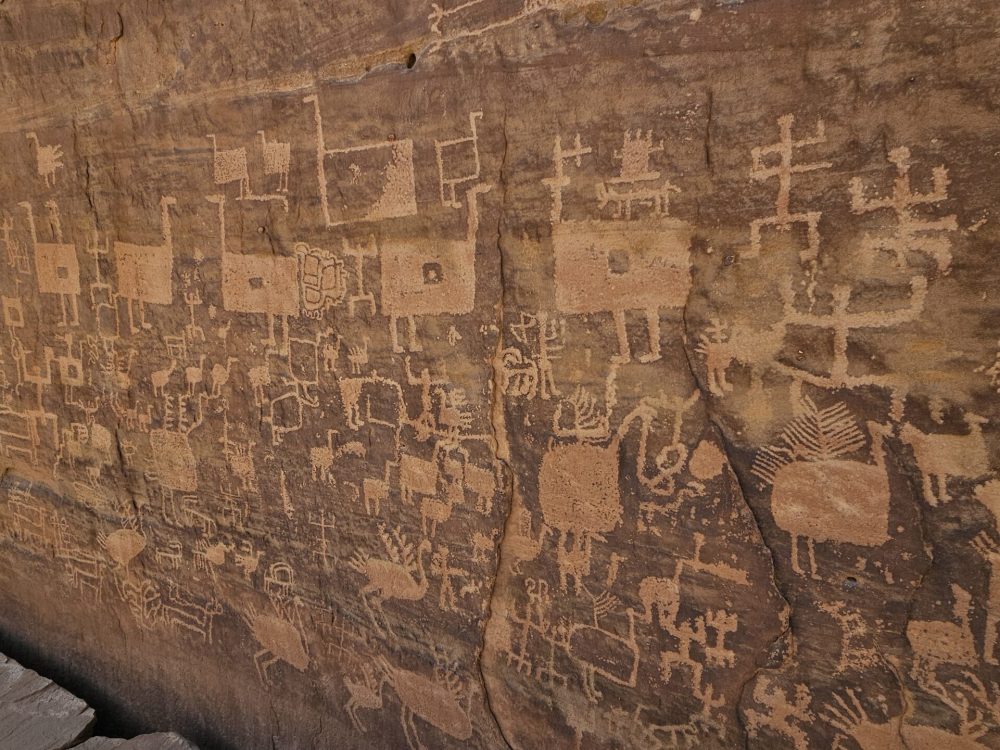
Ancient rock art depicting wildlife of AlUla, Saudi Arabia.


Building the Nature and Horticulture GIS Database for AlUla
Biologist Consultant · Remote · 2021-2022
This project focused on the design and implementation of an integrated Nature & Horticulture GIS Database to support evidence-based conservation, restoration, and land-use planning across AlUla.
I led the consolidation of heterogeneous ecological and spatial datasets produced by multiple stakeholders and transformed them into a unified, structured, and interoperable geodatabase. This required close coordination with scientific, operational, and management teams to ensure the database met both technical standards and on-the-ground conservation needs.
Key contributions included:
Collecting and harmonizing spatial and non-spatial data from a wide range of departments, including botany, wildlife, horticulture, conservation, seed bank, ranger services, visitor management, and tourism.
Designing data schemas, attribute structures, and metadata standards to ensure consistency, scalability, and long-term usability of the database.
Developing the overall database architecture, enabling integration of species records, habitat data, restoration activities, monitoring outputs, and management layers.
Conducting extensive stakeholder engagement through dozens of technical and strategic meetings to align data needs, workflows, and governance across teams.
Supporting decision-making by ensuring that ecological data could be efficiently queried, visualized, and used for conservation planning, restoration prioritization, and visitor management.
The resulting GIS database established a shared spatial intelligence framework for AlUla’s nature and horticulture programs, significantly improving cross-departmental coordination and the scientific foundation of conservation and land-management actions.

Mixed deciduous and conifer forests of Gümüshane Province, northeastern Türkiye.


Biodiversity Based Forest Management in Türkiye
Wildlife Expert · Türkiye · 2012 -2013
This project focused on integrating biodiversity data into operational forest management planning to support species-focused, ecosystem-based forestry practices.
I worked at two separate forest regions in Türkiye:
Demirköy Forests (Kırklareli) and Gümüşhane Forests, contributing to biodiversity inventories and conservation-oriented forest planning processes.
In Demirköy Forests, I led the planning and implementation of a comprehensive large mammal inventory within the framework of the project “Integration of Biodiversity into Demirköy Forest Management Plans”. In Gümüşhane Forests, I assessed the status and distribution of Brown bear (Ursus arctos) and Roe deer (Capreolus capreolus) using non-invasive field methods and structured interviews with forestry staff and local communities. The work included:
Designing and implementing camera-trapping and sign-survey protocols
Conducting field inventories across multiple sampling sites
Documenting species presence using standardized inventory forms
Supporting species distribution modelling for integration into forest plans
Outputs and Impact
Two detailed technical reports supporting forest management planning (Gümüshane report, Demirköy Report)
Spatial mapping of large mammal distributions and key habitats
Identification of core habitats, ecological corridors, and threat zones
Species-focused recommendations for forestry operations
Practical guidance to minimize habitat degradation and maintain population continuity
Supported by Baku-Tbilisi-Ceyhan Pipeline Company’s Environmental Investment Programme, GEF SGP and Turkish General Directorate of Forestry and executed by the Nature Conservation Centre, this project directly contributed to biodiversity-informed forest management plans, bridging field ecology with applied forestry and demonstrating how wildlife data can be operationalized within land-use planning frameworks.

A translocated fallow deer in Dilek Peninsula National Park


Anatolian Fallow Deer Re-introduction and Monitoring Project
Research Assistant and Field Coordinator · Remote · 2011-2012
The Anatolian fallow deer (Dama dama) represents the only remaining autochthonous population of the species worldwide, historically restricted to the Düzlerçamı region in southern Türkiye. This project aimed to reduce genetic, demographic and health-related extinction risks by establishing new, viable populations through carefully planned translocation and long-term monitoring.
Within the project funded by the Scientific and Technological Research Council of Türkiye, habitat suitability modelling, population viability analyses, and field-based monitoring were integrated to identify optimal release sites and test different translocation scenarios. GIS-based mechanistic distribution models were developed using topographic, climatic and ecological variables to map potential habitats across Türkiye. Priority areas were further evaluated through field surveys, logistical assessments and conservation feasibility analyses.
Between 2011 and 2013, 32 fallow deer were successfully translocated to Dilek Peninsula National Park and Köyceğiz Wildlife Reserve. Post-release monitoring combined GPS telemetry, capture–mark–monitor approaches, and an intensive camera-trap programme to assess survival, reproduction, spatial behaviour and habitat use. The project documented successful reproduction, high adult survival rates, and stable post-release settlement patterns.
I contributed to the project as a research assistant and field coordinator, leading much of the camera trapping fieldwork, participating in capture, collaring and translocation operations, conducting GPS telemetry, and carrying out post-release monitoring of the Dilek Peninsula population over a period of approximately 1.5 years.
This project represents a landmark conservation effort for the in-situ preservation of a globally unique large herbivore and provides a strong model for science-based wildlife translocation and monitoring.

A caracal camera trap image from Mugla Köycegiz WDR

Wildlife Reserve Ecological Assessment and Management Planning
Wildlife Expert · Türkiye · 2009-2012
I contributed to ecological assessment and wildlife management planning projects across multiple Wildlife Development Reserves (WDR) in Türkiye, including Konya Bozdağ WDR, Kütahya Türkmenbaba WDR, Hatay Altınözü WDR, İzmir Bayındır–Ovacık WDR, and Muğla Köyceğiz WDR.
These projects focused on establishing robust ecological baselines and translating field-based evidence into practical, site-specific wildlife management plans. Using non-invasive monitoring approaches, I assessed large mammal communities, identified target species for conservation (e.g. red deer, roe deer, Anatolian wild sheep, Bezoar goat, striped hyena, brown bear and caracal), priority conservation zones, and evaluated key ecological pressures affecting each reserve.
Fieldwork combined camera trapping, track and sign surveys, and habitat assessments to determine species presence, spatial use, and relative activity patterns. Based on these data, core wildlife areas, movement corridors, and conflict-prone zones were delineated, alongside an evaluation of anthropogenic threats such as habitat fragmentation, grazing pressure, infrastructure, and illegal activities.
The outcomes of these projects included comprehensive wildlife reports and management plans providing science-based recommendations for reserve zoning, monitoring strategies, threat mitigation, and long-term conservation planning. These plans were designed to support protected area authorities in aligning biodiversity conservation with sustainable land-use and management objectives.

Caucasian lynx image captured in the Kackar Mountains


Kackar Mountains Sustainable Forest Use and Conservation Project
Wildlife Assistant · Türkiye · 2009
Within the EU-funded Kaçkar Mountains Sustainable Forest Use and Conservation Project, that was led by TEMA, I worked as a Wildlife Assistant, supporting the Project Forestry and Conservation Coordinator and the wildlife expert team.
My role focused on the integration of biodiversity conservation into sustainable forest management, combining field-based wildlife work with coordination, communication, and capacity-building activities.
I contributed to the organization and implementation of wildlife inventories, including large mammal surveys using non-invasive methods, and supported mitigation efforts addressing human–wildlife conflict in forest landscapes.
In parallel, I was actively involved in organization and knowledge exchange, including the organization of trainings, stakeholder meetings, and international visits with ministry officials to Abruzzo National Park (Italy) and Cévennes National Park (France), focusing on best practices in protected area management and biodiversity-oriented forest planning.
I also contributed to the production of project outputs, including posters, brochures, technical inputs to reports, and scientific publications, working closely with the project’s wildlife development and integration consultants.
This role significantly strengthened my organizational, communication, and interdisciplinary collaboration skills, while allowing me to actively contribute to applied conservation outcomes at the interface of forestry, wildlife ecology, and policy.

Previously known as purple gallinule, a grey-headed swamphen image from surveys in Göksu Delta.


Wetland Bird Conservation, Monitoring and Lagoon Management Projects
Principal Investigator, Wildlife Expert · Türkiye · 2008 – 2009
Within a series of bird conservation and wetland management projects coordinated by the Turkish Nature Research Society, I served as Principal Investigator and Wildlife Expert, leading field-based research, ecological assessments and conservation planning across key wetland ecosystems in Türkiye. These projects focused on threatened and indicator bird species, as well as broader wildlife communities within Special Environmental Protection Areas (SEPA) and lagoon systems.
The projects integrated species-specific monitoring, population size and habitat assessment, and threat analysis, using standardized ornithological and wildlife survey methods. Fieldwork was complemented by literature review, stakeholder engagement and conservation-oriented reporting to support site-based management and protection strategies.
Göksu Delta Special Environmental Protection Area – Purple Gallinule Conservation and Monitoring
Assessed the distribution, behavior, population size, population structure and breeding capacity of the Purple Gallinule (Porphyrio porphyrio), and identified key threats affecting this local population and its wetland habitats.Köyceğiz–Dalyan Special Environmental Protection Area – White-breasted Kingfisher and Colonial Breeding Birds
Conducted population and breeding ecology surveys of the White-breasted Kingfisher (Halcyon smyrnensis) and colonial breeding bird species through line transects, point counts and habitat-based observations, including evaluation of predator presence and anthropogenic pressures.
Tuzla–Akyatan Lagoons Management Planning
Carried out comprehensive wildlife surveys with a focus on large mammal communities, using non-invasive methods such as camera trapping, and prepared mammal species inventories to inform lagoon-scale management planning.
All three projects resulted in technical reports, management-oriented publications and outreach materials, contributing directly to:
Improved understanding of wetland-dependent bird populations
Identification of conservation priorities and site-specific threats
Support for evidence-based management planning in protected lagoon and delta ecosystems
These projects collectively strengthened the scientific foundation for wetland conservation, species protection and sustainable management in some of Türkiye’s most important biodiversity hotspots.

Last confirmed records of Anatolian leopard from Köroglu Mountains range.


The Anatolian Leopard in Köroglu Mountains Range
Principal Investigator · Türkiye · 2008 – 2009
The Anatolian leopard (Panthera pardus tulliana), once widespread across Türkiye, was considered functionally extinct following the last confirmed record in 1974. This pilot project aimed to assess the continued presence of this Critically Endangered felid in northwestern Türkiye using an integrated, evidence-based field approach.
Funded by the Wildlife Conservation Society / Panthera Foundation study combined GIS-based habitat suitability modeling, systematic camera trapping, scat and sign surveys, and traditional field reconnaissance to identify areas with the highest probability of leopard occurrence across seasons. Based on spatial modeling, intensive fieldwork was focused on a 100 km² core area within the Köroğlu Mountain range, a largely intact forest landscape with a strong prey base. Sign and track surveys were conducted at a much larger area covering several mountain ranges.
Between December 2008 and December 2009, systematic camera trapping (3,930 trap-days) was conducted alongside regular ground surveys and structured interviews with local stakeholders. The project documented 13 wild mammal species, including the first camera-trap records of Eurasian lynx (Lynx lynx) and jungle cat (Felis chaus) for the region, contributing new baseline data for Türkiye’s mammalian fauna.
Although no photographic confirmation of the leopard was obtained, tracks, scrapes, and multiple credible sighting records supported the likelihood of continued presence. However, a sub-sequent 13-years Eurasian lynx monitoring project conducted by the PI has not confirmed presence of the leopard in the region. The study also identified hunting pressure and forestry operations as key seasonal disturbance factors. As a direct conservation outcome, the project informed local decision-making, contributing to the implementation of a temporary hunting ban and discussions on wildlife-friendly forest management practices.
This project represents one of the earliest modern, systematic attempts to reassess the status of the Anatolian leopard and laid important groundwork for future large-scale monitoring and conservation action. Project Report.